
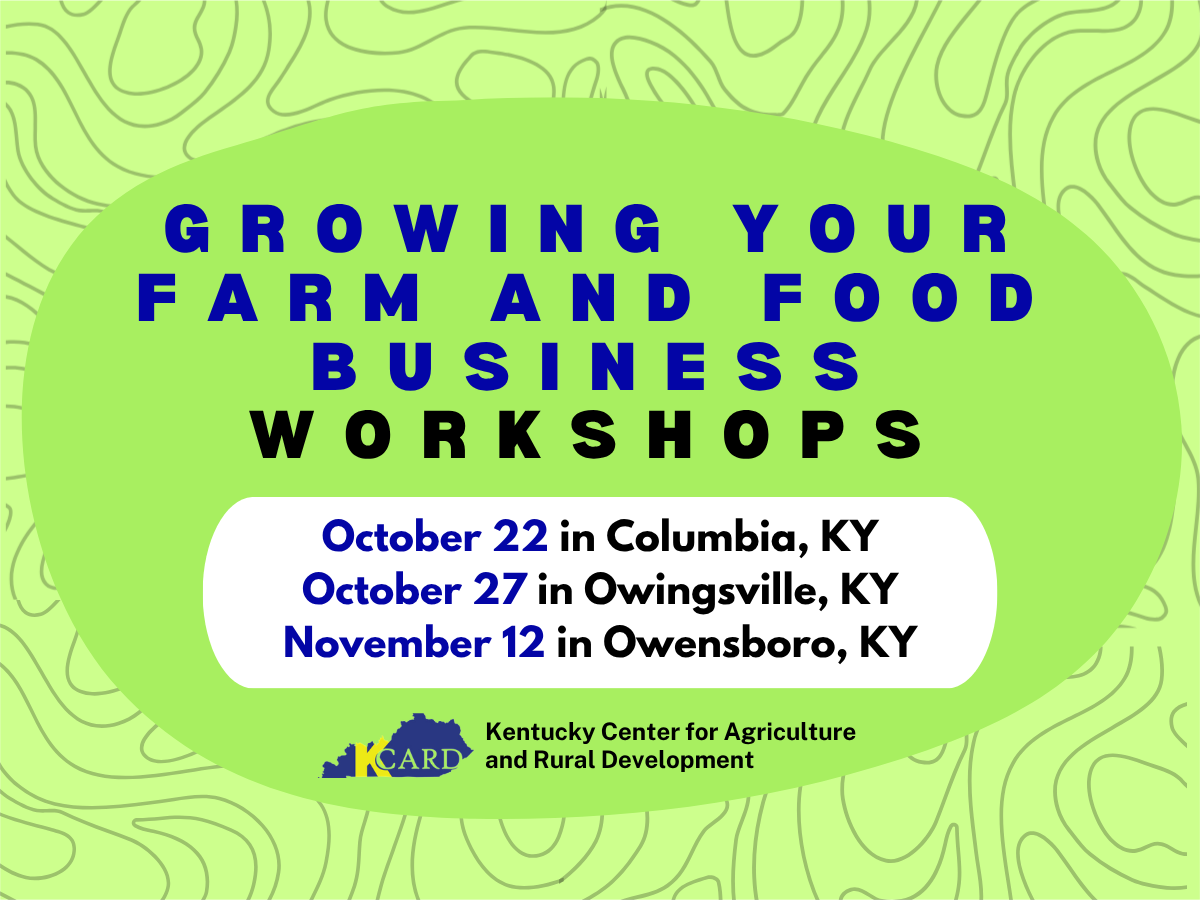
Join KCARD for a Growing Your Farm and Food Business Workshop this fall! Learn about business planning, financials, grant writing, and funding opportunities at one of three in-person workshops across Kentucky. Registration is $20 and includes lunch.

Thinking about adding something new to your farm or rural business? Whether it’s agritourism, a value-added product, a farm store, or a new service, a good idea needs more than enthusiasm to succeed. Explore seven key questions to help you evaluate the opportunity, understand what it will take to get started, and decide whether it’s the right next step for your business.

How did the Agribusiness Grant Facilitation Program (AGFP) become one of KCARD's cornerstone services? Learn how KCARD identified a need for grant assistance, launched AGFP in partnership with the Kentucky Agricultural Development Board, and continues to help Kentucky farmers and agribusinesses access funding through personalized grant facilitation services.
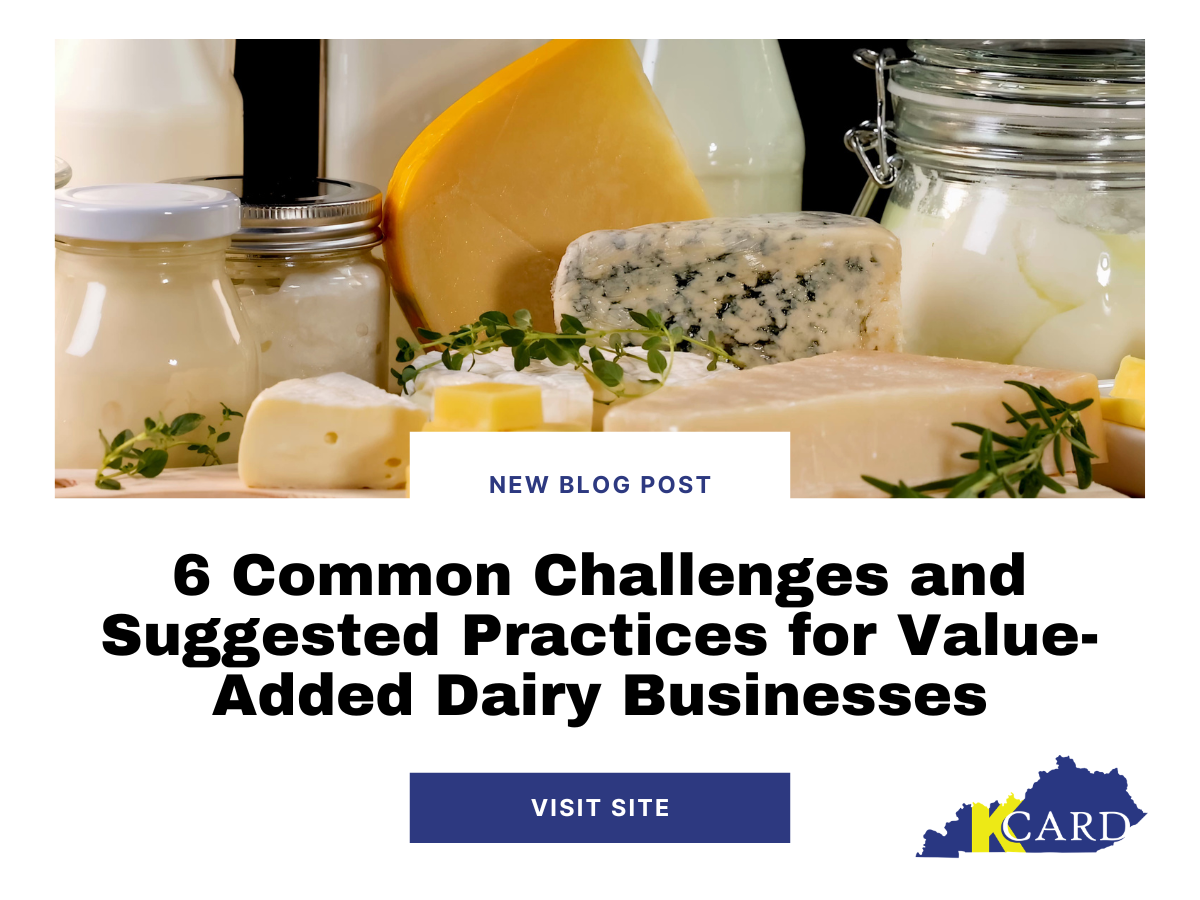
Value-added dairy businesses play an important role in farm profitability and rural economies, but growth brings new operational challenges. KCARD shares insights from dairy processor evaluations across Kentucky and the Southeast, highlighting common themes and practical opportunities to strengthen efficiency, consistency, and long-term success.
Learn how agricultural mediation can help Kentucky farmers and agricultural businesses navigate difficult conversations, farm transitions, and other challenges through confidential, neutral, no-cost support available through KCARD’s Kentucky AgriLegacy Solutions Program.
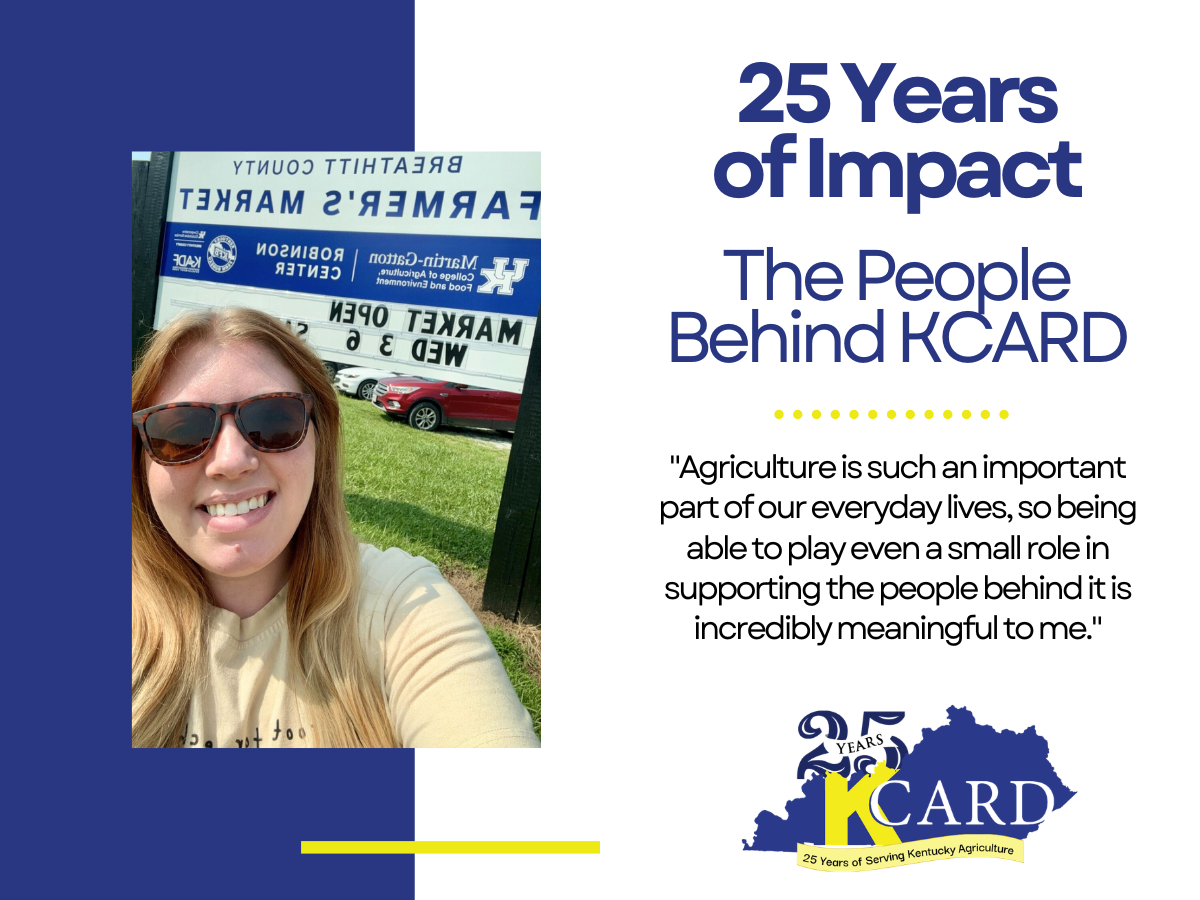
As part of KCARD’s 25th anniversary celebration, we’re highlighting the people behind the work. Maddie Grider shares how her agricultural roots and passion for supporting farmers have shaped her role at KCARD—and why helping Kentucky producers succeed continues to motivate her every day.
Promotion is about more than visibility—it’s about building relationships and connecting with your customers. This post explores practical marketing strategies for farms and food businesses, including engaging social media content, value-added promotions, and simple planning tools like a monthly content calendar. Learn how consistent, authentic storytelling and thoughtful promotions can help grow your audience and strengthen your brand.
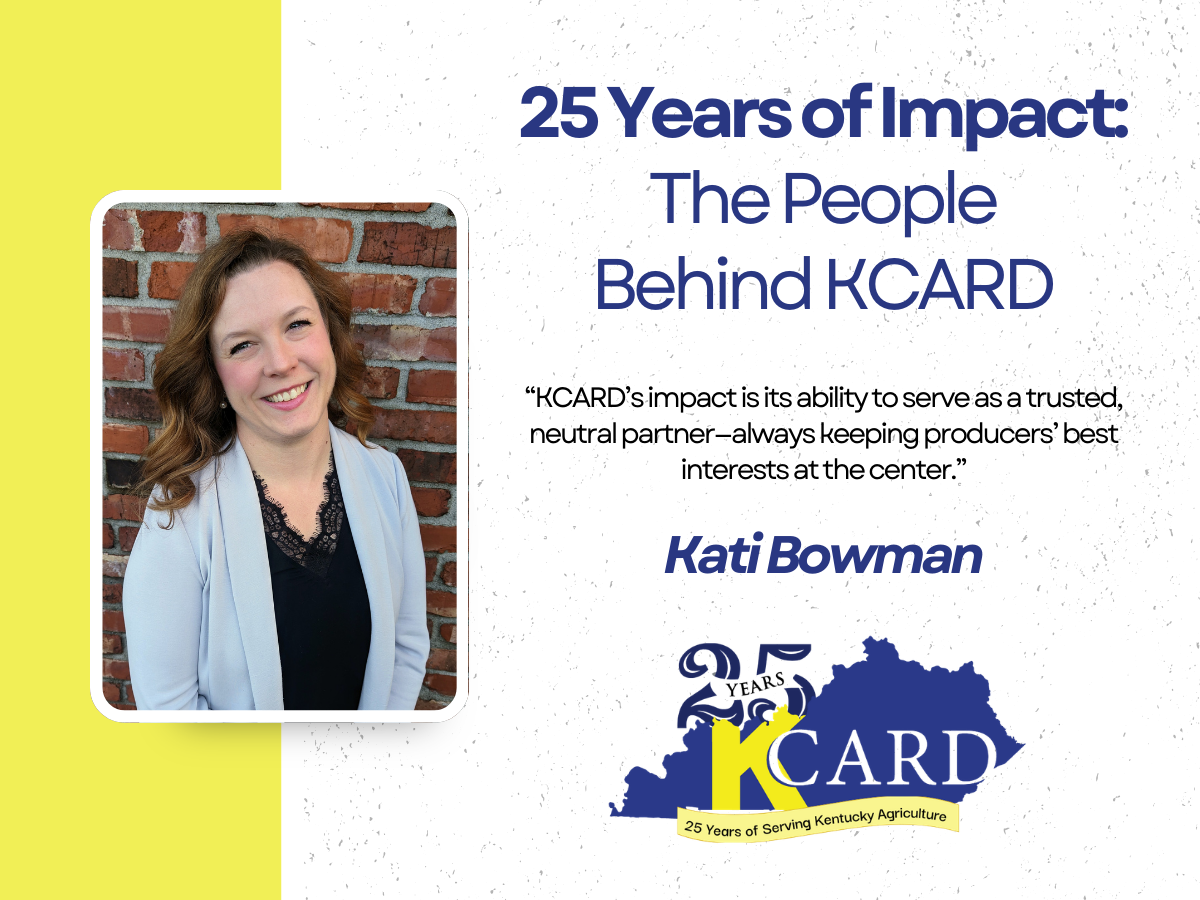
We’re celebrating 25 years of serving Kentucky agriculture by highlighting the people behind KCARD! Kati Bowman, Marketing & Business Development Specialist, has been part of KCARD for over eight years and has seen firsthand how the organization has grown to better serve producers and agribusinesses across the state. Learn more about Kati and her experience with KCARD in this post!
Transition planning can feel overwhelming, but starting the conversation is often the hardest step. This guide walks farm families through simple ways to prepare, organize key information, and begin discussing their vision for the future—helping make the process clearer, more productive, and less stressful.
KCARD is partnering with the University of Tennessee Extension’s Center for Profitable Agriculture to provide existing value-added dairy businesses with an in-depth analysis of their operation. This analysis consists of a comprehensive on-site evaluation by experienced and trained business consultants. The application deadline to be considered for the program is February 28th.
Marketing works best when it grows from a strong foundation. In Part 2 of KCARD’s Marketing Basics Series, we walk through common online and direct marketing channels for small farms and food businesses—and how to choose a realistic mix that fits your customers, goals, and day-to-day workload.
In 2025, KCARD continued supporting farmers and rural businesses across Kentucky, expanding programs, building connections, and helping communities thrive. As we approach our 25th anniversary in 2026, we’ll be sharing more stories of impact and the people, partnerships, and progress that have shaped KCARD over the years.

With pennies no longer being minted, farmers markets and on-farm vendors may need to adjust how they handle cash transactions. This guide explains what’s changing, what isn’t, and how to prepare customers and vendors for a smooth transition.
Strong marketing can help small farms stand out and connect with the right customers. Learn how the 4 Ps and 3 Cs—and KCARD’s marketing support—can strengthen your brand and boost your sales.
Every family farm has a story—but planning its future can be challenging. KCARD’s new Kentucky AgriLegacy Solutions Program helps farm families start meaningful conversations, set long-term goals, and create a clear transition plan with confidence and care. Learn how this program can guide your family through the next chapter while honoring your farm’s legacy.

As your farm or food business grows, your brand should grow with it. If your logo, labels, or website no longer reflect who you are or what you offer, it may be time for a refresh. KCARD can help you evaluate your current branding, align updates with your business goals, and move forward with a clearer, more confident image.

More Kentucky schools are looking to bring fresh, local foods into their cafeterias—creating new opportunities for farmers to grow their businesses while supporting healthy meals for students. But selling to schools is different from selling at the farmers market. From understanding purchasing processes to meeting food safety requirements, success starts with preparation and strong relationships.
Learn key steps to get started, connect with schools, and grow your farm-to-school sales.

As the growing season winds down, it’s the perfect time to revisit your business plan. KCARD’s latest post shares five quick ways to strengthen your plan before year-end — from updating goals and finances to preparing for upcoming funding opportunities. Learn how KCARD’s free, confidential assistance and Business Plan Development Guide can help you plan for a successful year ahead.

The first Growing Your Farm and Food Business Workshop in Pulaski County brought farmers and food business owners together for hands-on sessions in planning, funding, and grant writing. There’s still time to take part—join KCARD this fall in Shelby or Graves County to gain new tools, connections, and confidence to grow your business.
Forming an LLC is an important step in protecting your farm or food business—but it’s only the beginning. To truly gain the benefits of limited liability, you need to operate like an LLC in practice. That means keeping finances separate, maintaining records, and following the right business practices. Learn the key differences between having an LLC and running one—and how to make sure your business is protected.
Applying for a grant for your farm or food business can feel overwhelming. From project planning and budgets to telling your story, there’s a lot to manage. Check out our blog for 5 tips to strengthen your application and see how we can guide you through the process.

AI isn’t just for big tech companies — it’s already part of the tools you use every day. From creating social media posts to understanding your customers, AI can make farm and food marketing faster, easier, and more effective. Here’s how it works and simple ways to get started.

As we celebrate National Farmers Market Week, Greenup County Farmers Market shines as an example of how a small gathering of growers in 2004 has grown into a thriving market under a new pavilion—building community, supporting small businesses, and expanding food access with KCARD’s support.

In honor of National Farmers Market Week, we’re sharing how Community Farmers Market in Bowling Green grew from six vendors in a parking lot to a thriving, year-round local food hub. Read how their partnership with KCARD has helped fuel their success and helped make fresh, local food more accessible for everyone.

Pricing your flowers right is key to running a thriving cut flower business. Whether you're selling at a farm stand or designing for weddings, understanding your costs and setting strategic prices ensures your hard work pays off. Learn how to build profitable bouquet recipes, price for different markets, and boost your bottom line with smart add-ons!

Need a Clear Plan for Growth? KCARD Can Help.
A strategic plan is more than a vision—it’s your roadmap for success. Whether you're a farm business, food enterprise, nonprofit, or cooperative, KCARD can guide you through the strategic planning process, from clarifying your goals to crafting an action-ready plan. Our team offers expert facilitation, data-driven insights, and tools tailored to your organization’s needs. Ready to plan your future with purpose? Contact KCARD to get started.

Not sure how to structure your farm or ag business? Choosing the right business structure can impact everything from taxes to liability to transition planning. In this blog post, we break down common business structures—like sole proprietorships, partnerships, LLCs, and corporations—and what they mean for agricultural operations. Read the full post and view our quick reference guide to help you decide what’s right for your farm.

This Dairy Month, we’re celebrating more than just milk—we’re honoring the hardworking families who bring it to our tables. Just outside Campbellsburg, Kentucky, siblings Sharon and Terry Rowlett turned a family farm challenge into a thriving creamery business. With grit, creativity, and support from KCARD, they transformed their dairy operation into Rowlett’s Milkhouse Creamery—proving that with the right support, rural dreams can grow strong.

Considering a grant for your farm or food business? Grants can help you grow—but success takes more than a good idea. You’ll need a clear plan, strong documentation, and the ability to manage reporting and reimbursements. Before you apply, make sure the grant fits your goals, you're ready to handle the admin work, and you understand the requirements. With the right prep, grants can be a game-changing investment in your business.

Businesses registered with the Secretary of State (such as LLCs or corporations) are now required to report Beneficial Ownership Information. As of December 26, 2024, the deadline for BOI filing has been suspended until further notice. However, the report is expected to be required in the future. We recommend voluntarily completing the report to avoid having to monitor future deadline updates.

Take a look at some of the KCARD staff's favorite holiday recipes - such as Logan’s pumpkin roll! And don't forget to give the gift of local this holiday season.

Check out some favorite holiday recipes from the KCARD staff! Remember to also give the gift of local this holiday season.

Farming is a risky business with significant costs, and one of the most expensive mistakes is failing to plan or oversimplifying the transition of the farm. At its core, successful transition planning boils down to clear, honest communication and planning ahead. When communicating across generations, consider addressing key issues early to build mutual understanding and ensure a smoother transition.
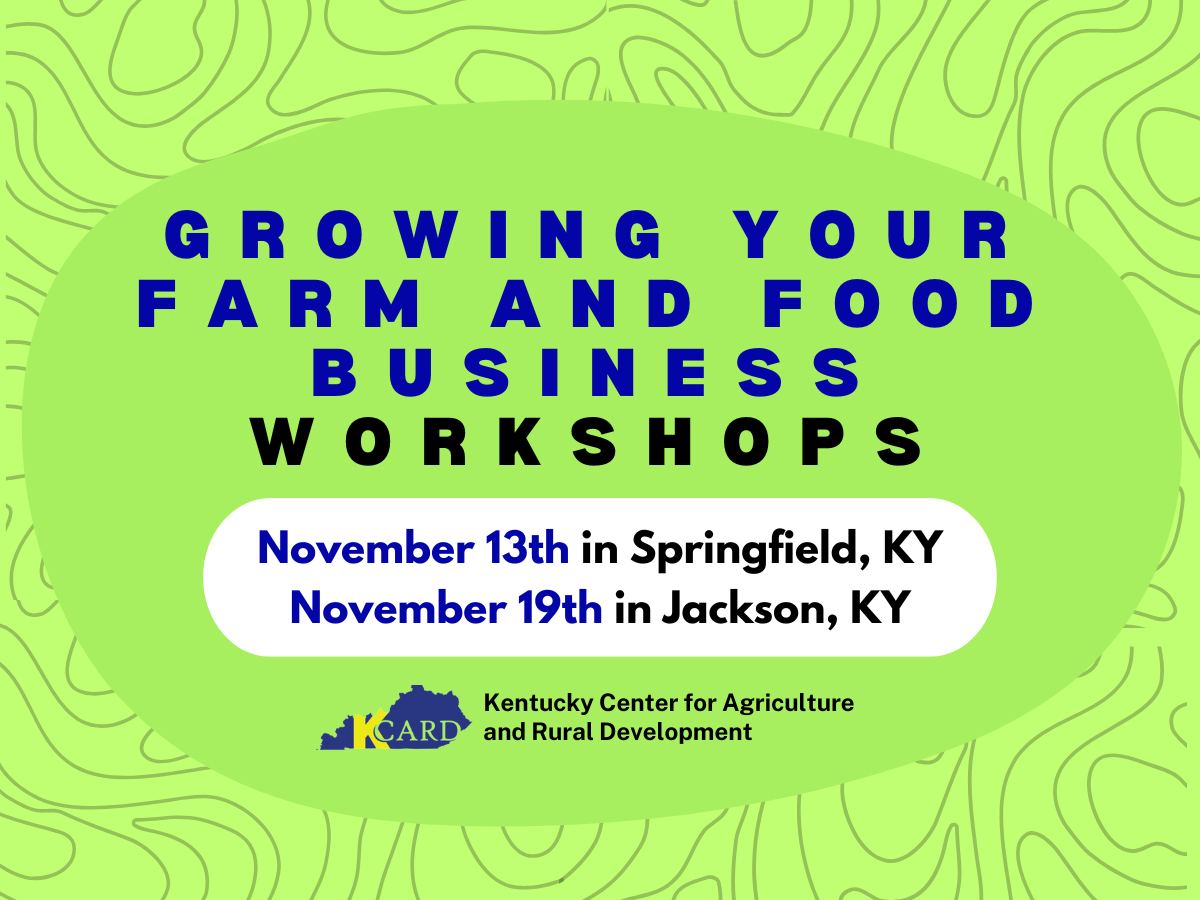
This fall, KCARD is hosting another round of our funding focused Growing Your Farm and Food Business workshop series. We kicked off this series with the first workshop in Grand Rivers on October 23rd. You can still join us in Springfield on November 13th or in Jackson on November 19th!

KCARD will be hosting a Planning for Farm Diversification workshop on October 22 in Murray, KY to assist agricultural producers who are transitioning out of dark tobacco and diversifying their farming operations with produce or raising livestock for value-added products. The workshops will provide information on business planning, marketing, produce safety practices, and production resources.

A well-hosted class or workshop can be one of the more profitable (and fun!) ways to engage visitors on your farm and offer agritourism opportunities. However, they can be quite labor-intensive and require lots of planning and thoughtfulness. Check out these tips to get you started!

The recently announced first round of the Business Builder Subawards through the Appalachia Regional Food Business Center is a potential grant opportunity for farm and food businesses.
To help understand the grant, review the FAQs and feel free to contact us at (859) 550-3972 or kcard@kcard.info. We can help you determine if this opportunity is a good fit for you and your business!

KCARD works specifically with farmers markets on a wide range of topics, including where to find funding, how to structure the market, and how to think of the farmers market as a business entity. In this post, Terryn Varney, KCARD Business Development Specialist who specializes in farmers market assistance, answers questions about how and when KCARD can help your farmers market.
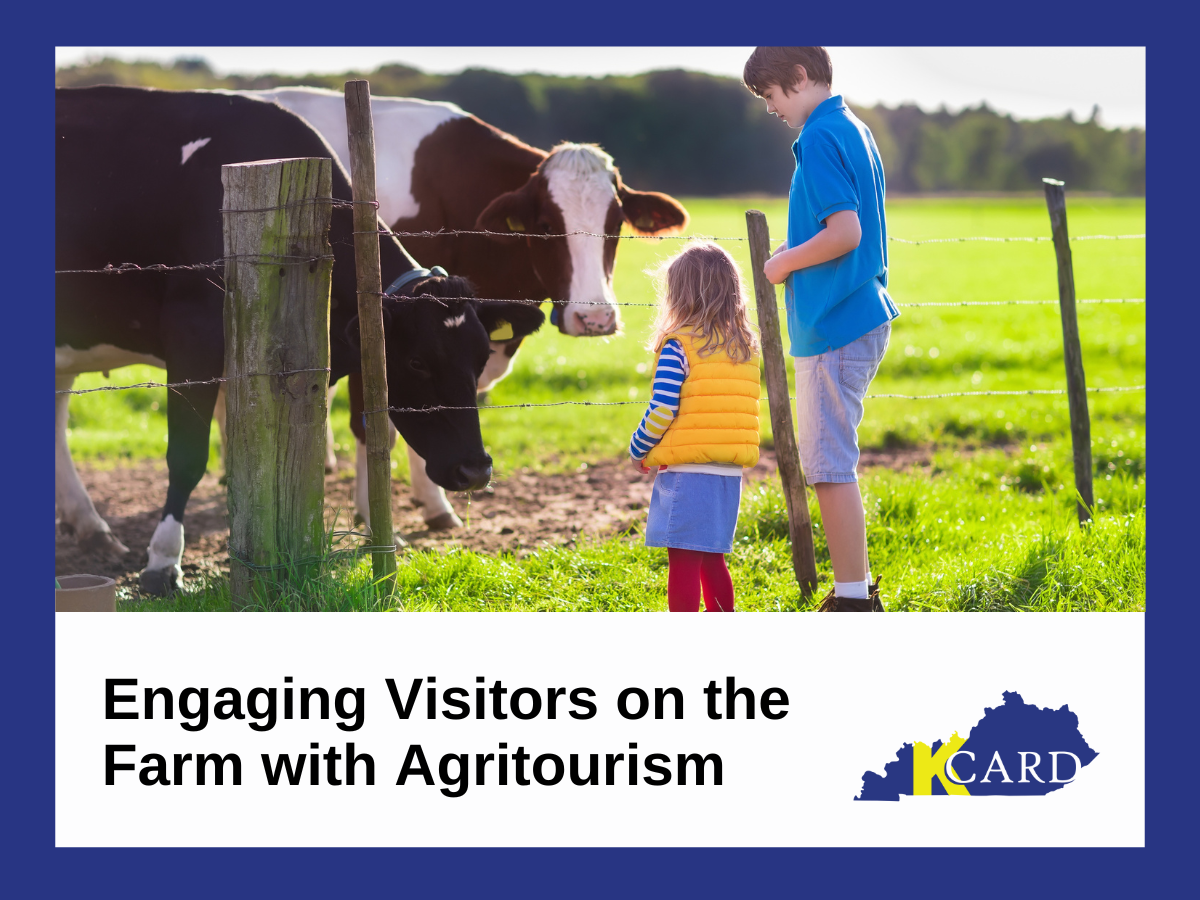
Engaging visitors on your farm through agritourism can transform a simple trip into a memorable experience. As more people seek authentic, hands-on activities, farms have a unique opportunity to diversify their income and connect with visitors by showcasing daily operations, offering interactive tours, and hosting fun, educational events.
Since agritourism is such a growing industry, you may also be wondering how to set yourself apart from everyone else. Here are 5 ways to engage visitors on your farm.

KCARD helps clients with a variety of services, including business planning, grant facilitation, recordkeeping, and financial development. In addition to those services, KCARD works with clients on developing marketing plans and social media strategies. Kati Bowman, Marketing and Business Development Specialist, answers a few questions about how KCARD can assist you with your marketing.

“What do I need for a commercial kitchen?” is a question we often hear at KCARD. Typically, the answer is not a simple one as several factors play into what will be needed for a commercial kitchen to be a useful and efficient endeavor. In this post, we’ve included some of the first steps we discuss with those interested in a commercial kitchen and resources to learn more.

Your marketing plan is a blueprint for launching a new business or product, understanding your target audience and your market, growing your audience and customer base, and promoting your overall business. With a well-designed marketing plan, you can design more effective promotions, reach your customers with targeted advertising, and track the success of your efforts.

While KCARD is able to provide a variety of services to clients, our staff spends a large percentage of time working with clients on business plans. Here are a few questions with one of our Business Development Specialists, Kellie Padgett.

There’s no denying that the world is different than it was before COVID-19. One demonstration of this is the reality that people often don’t carry cash, even when they’re heading shopping or to a farmer’s market. With this in mind, it’s important to consider offering different payment methods (most of which can be contactless). Check out these options for accepting alternative payment methods that don’t require hardware or a full POS system.

The Resilient Food Systems Infrastructure (RFSI) Program is currently accepting applications until April 5th for Infrastructure and Equipment-only projects that expand capacity for aggregation, processing, manufacturing, storing, transporting, wholesaling, and distribution of food products, for specialty crops, dairy, grains for human consumption, aquaculture, and other food products, excluding meat and poultry.
We’ve been asked lots of questions about the program, so we worked with the Kentucky Department of Agriculture to develop this list of frequently asked questions.

Digital marketing can be intimidating, with a lot of moving parts that you must manage and lot of options for tools to use that can be expensive. Check out this list for ideas for cheap (or free!) tools to help grow your digital marketing efforts!

Central Kentucky Grower's Assocation, which began as a vegetable marketing cooperative in 1999, has been looking ahead to new projects, including participating in the Local Food Purchase Assistance (LFPA) Program through the Kentucky Department of Agriculture. Through this program, CKGA are using their producer connections in the area to source and build food boxes that are then distributed to underserved communities across the state with a focus on Eastern Kentucky.

Farmers' markets can be a great way for producers of all sizes to create/expand their customer base and have a consistent marketing opportunity. If you're considering selling at a farmers' market for the first time (or sell at a market already), check out these tips for successfully selling at farmers' markets!

Farmers and business owners often don’t pay themselves a consistent wage/salary for a number of reasons, although they are contributing a lot of sweat equity to the business. Check out this post to learn more about how and why you should consider paying yourself as the owner of the business.

Sustainable Harvest Farm is a produce farm in London, KY owned and operated by Ford and Amanda Waterstrat. Sustainable Harvest Farm is focused on providing sustainably grown organic produce across the state and a fully customizable CSA program.

This week is Kentucky Proud Fall CSA Week so we’re highlighting some of the many benefits of joining a CSA, plus some tips on how to get the most out of your CSA share. CSAs can be a great way to have consistent access to local, fresh produce while also supporting and developing relationships with local farmers.

One direct-to-consumer marketing arrangement that has increased in popularity in the past several years is Community Supported Agriculture (CSA). While this can be a great model for many farm businesses, it’s important to evaluate the pros and cons to understand if starting a CSA is right for your farm business.

Getting a loan to purchase a farm, or an operating loan, can seem like a challenging task. Farmers often have questions about what information they’ll need to have to successfully obtain a loan, how long the process will take, and more. Check out these tips on ways to prepare for getting a farm loan.

Happy National Farmers Market Week! This week, we’re celebrating with farmers markets across the state, like Franklin County Farmers Market, and highlighting how KCARD can work with markets on various projects.

July is Kentucky Cut Flower Month, so we’re celebrating with a spotlight on the Kentucky Flower Market! Owned by Sarah Torgerson and Kayla Carey, the Kentucky Flower Market, based in Simpsonville, KY, is a collaborative market of flower farmers who sell and market together, primarily through an online platform.

CBRN Specialist Kristen Kalm is currently interning with Todd County Animal Clinic through the Kentucky AgVets Boots to Agriculture Internship Program. In this post, we sat down with Kristen to ask some questions about herself and how the program has helped her plan for after she exits service.

June is Dairy Month in Kentucky! To celebrate, we’re spotlighting Legacy Dairy, a fourth-generation family farm operated by the Jones family in Barren County, KY. Legacy Dairy offers whole, non-homogenized milk that comes strictly from cows raised and cared for on the farm, where it’s also bottled and processed.

The USDA Agricultural Marketing Service recently announced a new grant program for meat processors: the Local Meat Capacity Grant (Local MCap), due on July 19th. For more information on the program including who can apply, what projects are eligible, and how to get started, check out this blog post!

Rabbit processing is becoming increasingly popular in the state, and we’ve been receiving some questions about the rules and regulations of rabbit processing. This post summarizes the key regulations you need to follow in order to process rabbits for meat.

For Beef Month in Kentucky, we’re highlighting Roaring Shoals Farm! Roaring Shoals Farm is a small Black Angus beef farm in Breathitt County, owned and operated by Erik and Amy Holbrook. Both raised on farms in Breathitt County, Erik and Amy take pride in raising grain-finished, dry-aged beef that is born and raised on the farm.

In the final part of the Local Food System Expansion Initiative story map series, we take a closer look at some of the larger local food industries (meat, dairy, and produce) and supporting infrastructure in Kentucky, including where they are clustered and where there may be a lack of farms or infrastructure to serve the local population. While this series has been a snapshot of the full story map, be sure to check out all of the information, including interactive maps with county data, HERE.

As part of KCARD’s state-wide Local Food System Expansion Initiative, a series of interactive maps has been developed to visualize the Kentucky local food system. In the second part of the series, we take a closer look at local food sales in Kentucky, including both direct-to-consumer sales and other market channels like restaurants, retailers, and institutions. Stay tuned for the final part of the series where we’ll look at specific food industries in the state!

Maps help us navigate the world, and they not only show us how to get from point A to point B, but, depending on the type of map, they can also help us to see where patterns, clusters, and gaps exist in a spatial environment. As part of KCARD’s state-wide Local Food System Expansion Initiative, a series of interactive maps has been developed to visualize the Kentucky local food system. Stay tuned for parts two and three of the series in the next few weeks. We will present a closer look into local food sales in Kentucky and the various industries that make up the local food system.

The off season is a great time to take a look at your business’s financials! One of the pieces of advice we often tell agribusinesses is to “own your numbers”. As a business, you should understand your income and expenses, and know where the numbers on your financial statements came from. Check out this post to understand what financial statements KCARD can help with and why financial projections are important for your business.

We’re often asked by farmers and agribusinesses how to apply for federal grant programs, such as the USDA Value-Added Producer Grant (due on May 16). While these grant programs can be a good option for growing agribusinesses to obtain capital, it’s important to understand how much work goes into receiving a grant, even beyond the application itself. Often, applying for federal grants requires 40 to 80 hours of work. Check out these four tips to help prepare you for applying for a federal grant program.

Cherry Farms, located in the small community of Fountain Run, KY, has been the home and workplace of three generations of the Cherry family – but that doesn’t mean the farm has looked the same for all of these years. The farm started as a small dairy, beef cattle and tobacco operation, but owners Mark and Tonya Cherry shifted the focus to USDA-inspected beef and pork as a result of the COVID-19 pandemic.

At KCARD, we understand how intimidating starting a business plan for the first time can be. Whether you’re starting a new business or creating/updating a plan for an existing business, there can be a lot of questions about the process of writing a business plan. While we do believe all information in the business plan is useful, there are three elements that we often encourage businesses to research further and expand upon.

Through the Kentucky AgVets program, we are working with key organizations throughout Kentucky to provide educational opportunities, hands-on training and access to funding resources. Hands-on training experiences can take two different forms; check out this post to learn which program is right for you!

The beginning of a new year is often spent reflecting on the past year and planning for what is to come. We often make New Year’s resolutions to form new habits focused on our health and wellness; here are six habits that focus on improving the health and wellness of your business.
As a cooperative development center, KCARD publishes blog posts about cooperative development, including when a cooperative makes sense, how it compares to other business structures, and more! If you want to learn more about co-ops or are interested in developing a co-op, this blog series is a great place to start.

The Kentucky Center for Agriculture and Rural Development (KCARD) board has announced Brent Lackey has been appointed KCARD's new executive director, effective November 1.

In addition to the Census of Agriculture, USDA conducts topical surveys that cover specific sectors in agriculture such as Local Food Marketing Practices. We dove into the 2020 Local Food Marketing Practices survey results that were released in April 2022, and we resurfaced with a trove of information that highlights the current status of local food nationally and within the state.

“What happens to the family farm?” is a question that commonly comes up after an unfortunate accident or death, which can add stress and tension to an already difficult situation. However, it’s ideal to create a plan early so the farm can pass more smoothly to the next generation. In this post, we discuss initial questions to consider and the best first steps to take when beginning the process of succession planning.

We have all felt the increase in our bills at the grocery store this year, but what does that mean for farmers? The difference between retail prices of food and farm-level prices includes costs of distribution, processing, marketing, packaging, retailing, and more. Buying directly from farmers and supporting local food suppliers helps bring more of the food dollar back to the farm.

Farmers purchase crop insurance to protect their crops from things like natural disasters, diseases, insects and market pricing drops. There are many myths about crop insurance, including that it’s too expensive and it’s only for “big” farms, which we’ve debunked in this post.

Are you headed to the Kentucky State Fair this year? Come and visit the AgVets team at our booth located in the Gourmet Gardens area in the South Wing lobby. Our team will be there on August 21st for Military Appreciation Day and August 28th for First Responders Day.

July is Kentucky Grown Cut Flower Month, so we’re celebrating with a spotlight on Eden Roots Flower Farm! Eden Roots Flower Farm is a small cut flower farm owned by Sarah Torgerson in Simpsonville, Kentucky that offers homegrown cut flowers for retail and wholesale, as well as arrangements for small events.

With apple picking and pumpkin patch seasons right around the corner, many seasonal Kentucky agritourism operations are gearing up for their busy seasons. At KCARD, we’ve been seeing a wide variety of agriculture operations adding elements of tourism and education to their farms, including u-pick berry farms, farm stays, hands-on workshops, Airbnbs, and more. In this post, we discuss five things to consider before adding agritourism to your farming operation.

Jericho Farmhouse is an ice cream shop and farm market in Henry County, KY owned by the Coombs Family. The Coombs family operated a dairy farm for generations until 2018 and now, Jericho Farmhouse offers ice cream, beef, a place for local farmers to sell their products, and plenty of fun farm experiences.

Owning a business can be tough and paying employees can be confusing. Some businesses will prefer a local bookkeeper they can meet with face-to-face, but as more services move online, businesses are becoming more comfortable with online professional service providers for assistance with payroll and taxes. Before choosing an online payroll provider, it’s important to consider your business’s needs to see which option is right for you.

This month, we spoke with Juan Alejo about his internship with Fox Creek Cattle Company through the Boots to Agriculture Internship. KCARD assists with this internship as part of the Kentucky AgVets Program, which helps veterans and transitioning service members who are interested in agriculture access resources, internships, and educational opportunities.

In order to diversify and increase profits, many farms are adding value-added products to their lists of offerings. For produce farmers, “value-added” refers to processing their fruits and vegetables into another product of higher value, such as jam, salsa, or pre-cut/ready-to-cook vegetables. While this can help bring extra revenue to the farm, it’s important to consider the extra time and money that will go into launching a new value-added product. If you’re thinking about introducing value-added products, start by considering these questions.

Your online presence is a key part of your marketing plan. You can use your social media pages to build your brand awareness, develop relationships with customers, and even to make sales. Though each social media network is different and has a specific algorithm, here are three tips to maximize your social media presence across your platforms.

Nestled in between the small towns of Tompkinsville and Gamaliel in southcentral Kentucky, Patterson’s Butcher Shop is a recently opened custom processing business and meat retail store owned by Jorden Patterson Emmert. They offer custom slaughter and a wide variety of retail cuts, including beef, pork, lamb, goat, and ready to cook meals.

Many KCARD clients sell their products at their local farmers markets, so we've compiled some tips to help you have the best possible experience when visiting the farmers market. Remember that when you shop at your local farmers market, you are paying for a fresher, tastier product that benefits your local economy by keeping every food dollar local.
In May 2020, KCARD launched the Kentucky Local Food System Expansion Initiative through support from an USDA Local Food Promotion Program grant. The goal of the Initiative is to increase local food sales for Kentucky producers by developing sales connections with buyers such as retail stores, institutions, restaurants, schools, and distributors. At 24 months into the Initiative, we wanted to provide a quick glimpse at producers who have been assisted thus far.

We get asked all the time how to get “free money” in the form of grants for on-farm projects. The answer is pretty simple: there is no free money. While grants can be a helpful way to fund worthwhile projects on the farm, there is a lot of work that goes into receiving a grant. In this post, we discuss some of the key steps of the grant application process.

Are you interested in serving as a mentor for the Kentucky AgVets Program or have an interest in participating in the program as a veteran? Mentorships will be designed to provide hands-on training and develop a network for veterans looking to start their career in agriculture.

Some of our growing clients get to a point where they feel like financial documents and planning are taking away from their time developing new customer relationships or managing other aspects of the growing business, so they start thinking about contracting that component of the business out. In this post, we discuss some things to consider when finding an accountant for your business.

KCARD provides a lot of different services, but key to each one is our mission of Business Development for Kentucky farmers and agricultural businesses. While some businesses may not see the need for a business plan, here are three reasons that smart businesses put time into business planning.
Did you know that if you offer your customers too many options that it decreases the chances that they make a purchase? A lot of food businesses we work with want to have 20+ varieties of the value-added food product that they are making. The problem: having too many choices in a food category causes our brain to go a little haywire. In this post, we discuss what you can do to prevent choice overload in your customers.

Launched in 2020, KCARD’s Kentucky Local Food Expansion Initiative connects local farmers to buyers and seeks to grow a strong and diverse buyer-producer network across the state. One aspect of the initiative includes visualizing where local food production and sales are already occurring and where they are not to inform the work.

Please join the AgVets team on March 19th at 10am-4pm at the Robinson Center for Appalachian Resource Sustainability (RCARS) in Jackson, KY for QPR training in the morning, followed by a catered lunch, and a high tunnel workshop in the afternoon.

Woodstock Lavender Co. Is a family-operated lavender farm located in Somerset, KY, owned by Allison Horseman and her mother, Mary Ann May. The business offers handcrafted and natural lavender products. Woodstock Lavender Co. utilized KCARD’s services to turn their idea of a lavender farm into a successful business.

Adding value to your farm product can bring more of that food dollar back home to the farm. Many Kentucky farmers transform their raw agricultural commodity into a different product with higher market value (milk to cheese, fruit to jam, etc.) This may seem like an obvious way to increase revenue, but it’s important to understand all of the costs associated with launching a value-added product. Understanding your costs will help you price your product at the right level and ensure that you can make a profit off the finished product.

It is important to understand the cash flow needs of your business and the potential threat of not having enough cash on hand. One of the most common challenges we see in businesses with whom we work is cash management.

The Kentucky Center for Agriculture and Rural Development has two openings: 1) full-time Business Development Assistant/Specialist (designated as either Assistant or Specialist depending on level of experience and expertise) and 2) part-time Administrative Assistant.

Mark it down as a problem that businesses had before COVID that has only gotten worse in the pandemic: finding and retaining workers. As a result, a lot of businesses are having to think creatively about their operations from start to finish to figure out how to handle this challenge. We were recently asked about how to do just that. Check out this blog post to learn more.

The cooperative business structure can be an effective organization, but it is not appropriate for everyone or every business idea. When deciding whether to develop a business as cooperative, there are four key factors that need to be present for the cooperative structure to be the right choice.

Farmers in 14 states now benefit from the vision the founders of Kentucky Organic Farm and Feed Inc. had in 2009. From serving just two farms to farms all over the region, Kentucky Organic Farm and Feed Inc. (KOFFI) of Guthrie, Kentucky is the leading organic feed and fertilizer supplier in the area, offering 100% certified organic feed of any type to a wide variety of customers.

October is National Farm to School month, and to celebrate, the Kentucky Farm to School Network* is launching a statewide initiative to encourage farm to school activities – The Kentucky Farm to School Challenge!

So, what is a cooperative? A cooperative, or co-op, is an organization owned and controlled by the people who use the products or services the business produces. Cooperatives differ from other forms of businesses because they operate primarily for the benefit of the members. Co-ops, as a business structure, have a few unique advantages.

KCARD’s Local Food Project Coordinator Olivia Vogel talks broken supply chains and the role of Kentucky farms to meet the needs of Kentuckians in this post.
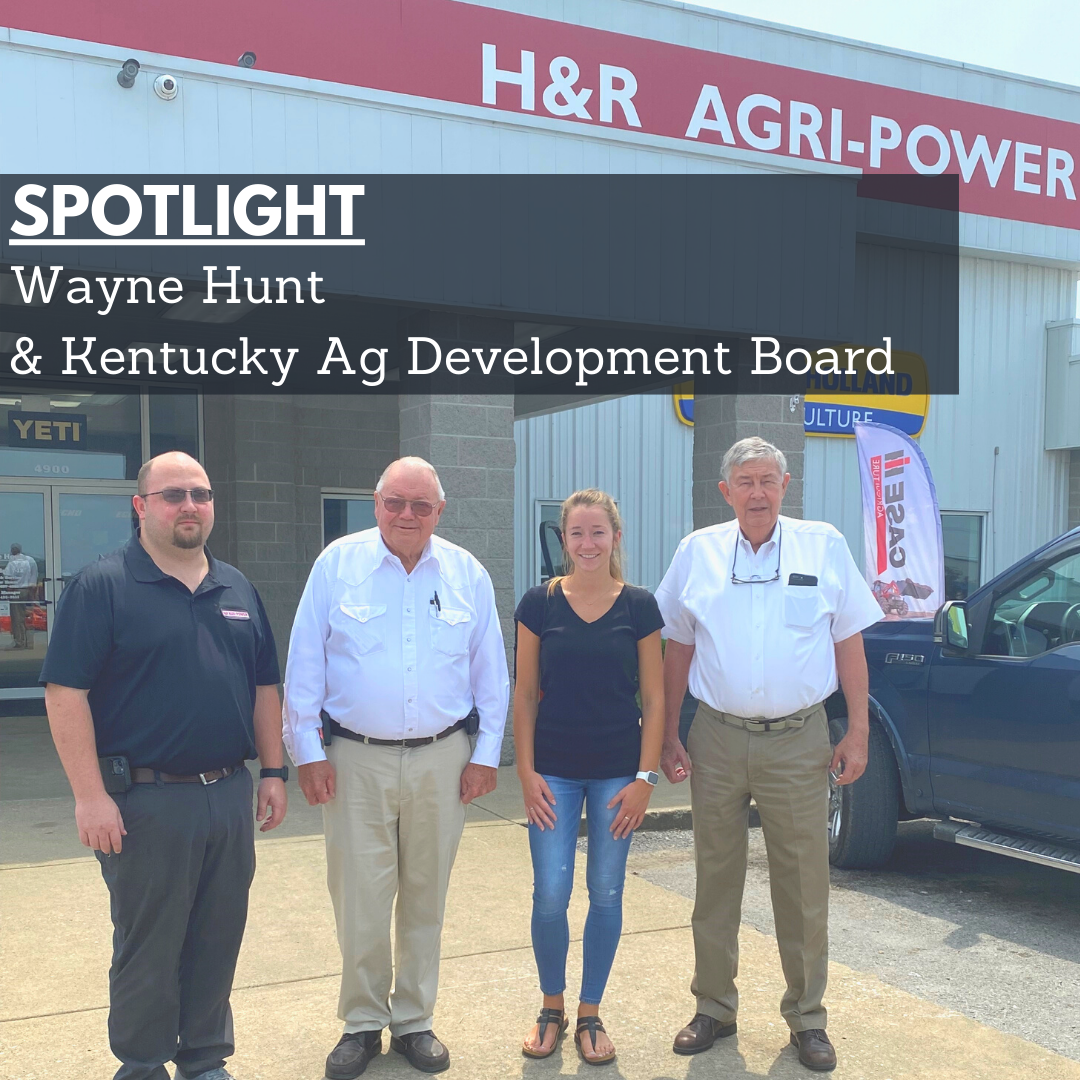
“It’s hard to make decisions when you are funding dreams. That’s what we do.” Wayne Hunt has been helping fund dreams through his service on the Kentucky Agriculture Development Board since its inception in July of 2000. Through his service on this board and his work to spread the word about the benefits of producer-owned cooperatives, Wayne has gotten to know the work of the Kentucky Center for Agriculture and Rural Development (KCARD) well.

Creating a business plan is an important first step in developing and maintaining a viable business. The business plan lays out a variety of aspects of your business for you, from the official name of your business to who will post on social media and anything in between. Business plans help you communicate your vision for your business in an organized way that can also hold you accountable to the goals you establish.

As an agricultural business owner, it’s inevitable that you will be asked the question “what do you do?” by a wide variety of people, such as potential customers, investors, or even competitors. You might be asked at a school event, community gathering, or even while at the grocery store. Having a clear answer to this question can help you make new relationships that will help your business.

Keeping records is VITAL to your business. It helps you measure your growth (or decline), see what is costing you the most, and give you an idea of how much money you have at a given time. A business owner must think about how they can best keep records to ensure the system will be useful. In this blog post, KCARD outlines the three different types of recordkeeping systems.

Are you wondering if a point of sale system is a good fit for your business? A POS System allows you to maintain sales history, adjust production or buying decisions as well as analyze sales data to figure out how well items on your shelves are selling. Check out this blog post to learn more!

Maddie Grider, KCARD’s client coordinator and project assistant, took some time to answer a few questions about herself and the assistance she provides.

In the state of Kentucky, fruit and vegetable producers are right in the middle of their busiest time of year. Although most preparations take place later this year, or even early next year, there are steps producers can take now that will make next season that much better.

In this blog post we are highlighting some of the most frequently asked questions about registering for a farm number with the Farm Service Agency Office (FSA).

The cows grazing on the pastures behind Kenny’s Farmhouse Cheese in Austin, Kentucky, are working hard, but the pay-off will take months before the milk they produce becomes the Kentucky Bleu, Colby, Norwood, Tomato Basil Cheddar, or Smoked Gouda and arrives at stores and restaurants across Kentucky.

Chris Chamberlain started Bluegrass Blessings after his retirement from the Air Force. He was kind enough to spend a few minutes with us and share a little bit about his farm and why he is passionate about agriculture.

On July 25, Kentucky AgVets will host the inaugural Kentucky AgVets Field Day at Cedar Creek Beef Company from 1-4 pm EST. Check out the questions and answers below for more information or if you have additional questions, email kpadgett@kcard.info.

“I need a feasibility study.” Maybe. When we hear these words at KCARD, we are going to want to know a lot more about your business and what you want to do with it.

Ask kids in the Bowling Green area their favorite spot to get ice cream and you might hear a story about Miss Glimmer, a famous Jersey cow who called Chaney’s Dairy Barn home for years. Miss Glimmer witnessed first-hand the transformation of the business owned by Carl and Debra Chaney from dairy farm to booming agritourism destination where over 300,000 people visit each year. The Kentucky Center for Agriculture and Rural Development was right there with her.

Aleta Botts, KCARD’s executive director, took some time to answer a few questions about herself and what it’s like being an executive director.

Larry Snell rarely had the opportunity to look back over his ten years as KCARD’s Executive Director while he was serving in that role. He was working too hard at the time to lay the foundation for an organization that would evolve to fit the changing demands of Kentucky agriculture. KCARD recently caught up with Larry, now retired.

The Kentucky Center for Agriculture and Rural Development is seeking an individual to work with agricultural and rural-based businesses seeking KCARD assistance through KCARD’s Agribusiness Grant Facilitation Program. This is a full-time position, and KCARD employees have flexible scheduling options available.

The Kentucky Center for Agriculture and Rural Development is hiring an individual to assist the KCARD team in its work with agricultural and rural-based businesses seeking KCARD services. This position will support KCARD’s work with these businesses and provide the individual with an opportunity to learn business development and advance to other positions.

Are you curious about incorporating a UPC barcode (Universal Product Code) on your food or farm product? UPC barcodes are commonly used on a variety of products to help track these items as they move through the supply chain. If you are targeting retail stores for sales, incorporating UPC barcodes on product labeling is a must.

The Kentucky Sheep and Goat Development Office (KSGDO) is a partner in KCARD’s Agvets program, which is helping veterans and active duty service members start or develop agricultural businesses. Kelley Yates with KSGDO took some time to answer a few questions about upcoming programs and how to learn more about small ruminant production.
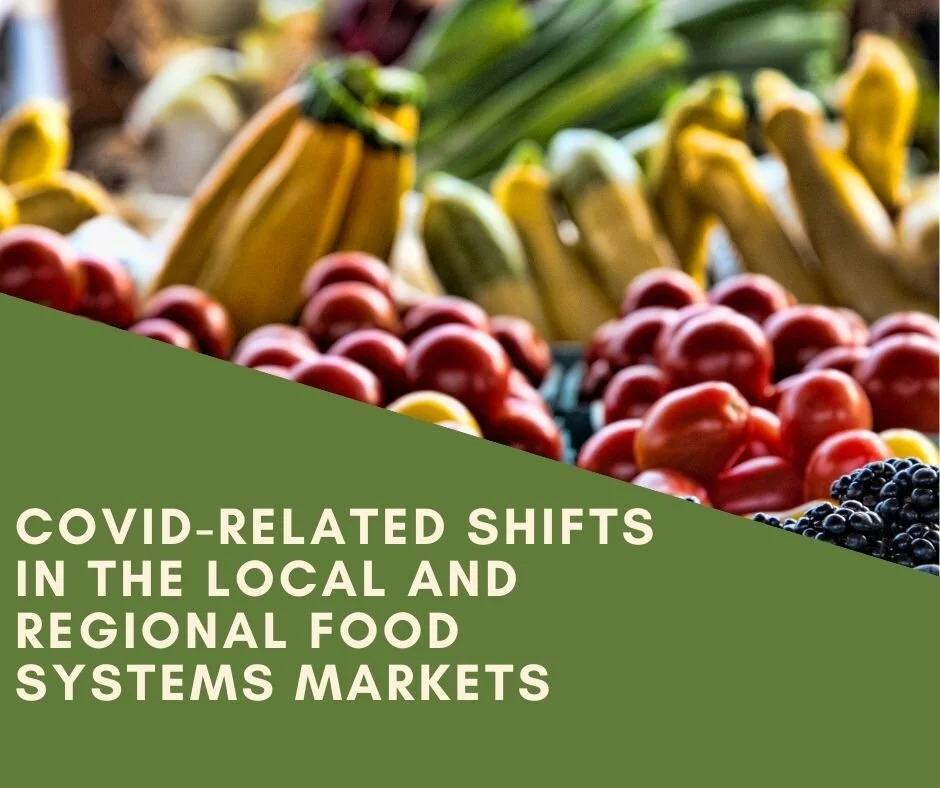
We all know that over the course of one long year of COVID-19, our habits have changed. From baking bread to who we break bread with, new norms have been established at a rapid pace. One team of researchers, led by the University of Kentucky, is documenting the innovations and COVID-related shifts in the Local and Regional Food Systems markets. Check out the detailed results from a 5,000-household surveyed in the fall of 2020 here and read some key takeaways and lessons for businesses that we have extracted, below.

Myrisa Christy, KCARD’s project director, took some time to answer a few questions about herself and coordinating work in Eastern Kentucky and with our partners in the Appalachian Region.

Have you ever thought about marketing your farm’s local food to restaurants but just don’t know where to start? We have put together a few tips for you to make the sales pitch as seamless and successful as possible.

At KCARD, when we are working through financials for clients, we are often asked “Do I need to file a Schedule F?” or we often ask businesses if they have ever filed a Schedule F.

Abby Clas, KCARD’s research assistant, took some time to answer a few questions about herself and the assistance she provides to KCARD staff.

Last year about this time, we all began learning a lot more about COVID 19. We also started seeing grocery shelves with less meat on them than we normally expected to see. Meat processors in the state who were already at least six to eight weeks booked if you tried to schedule animals to be processed started getting a lot more calls as more people were seeking local meat and more farmers saw an opportunity to expand direct meat sales to consumers.
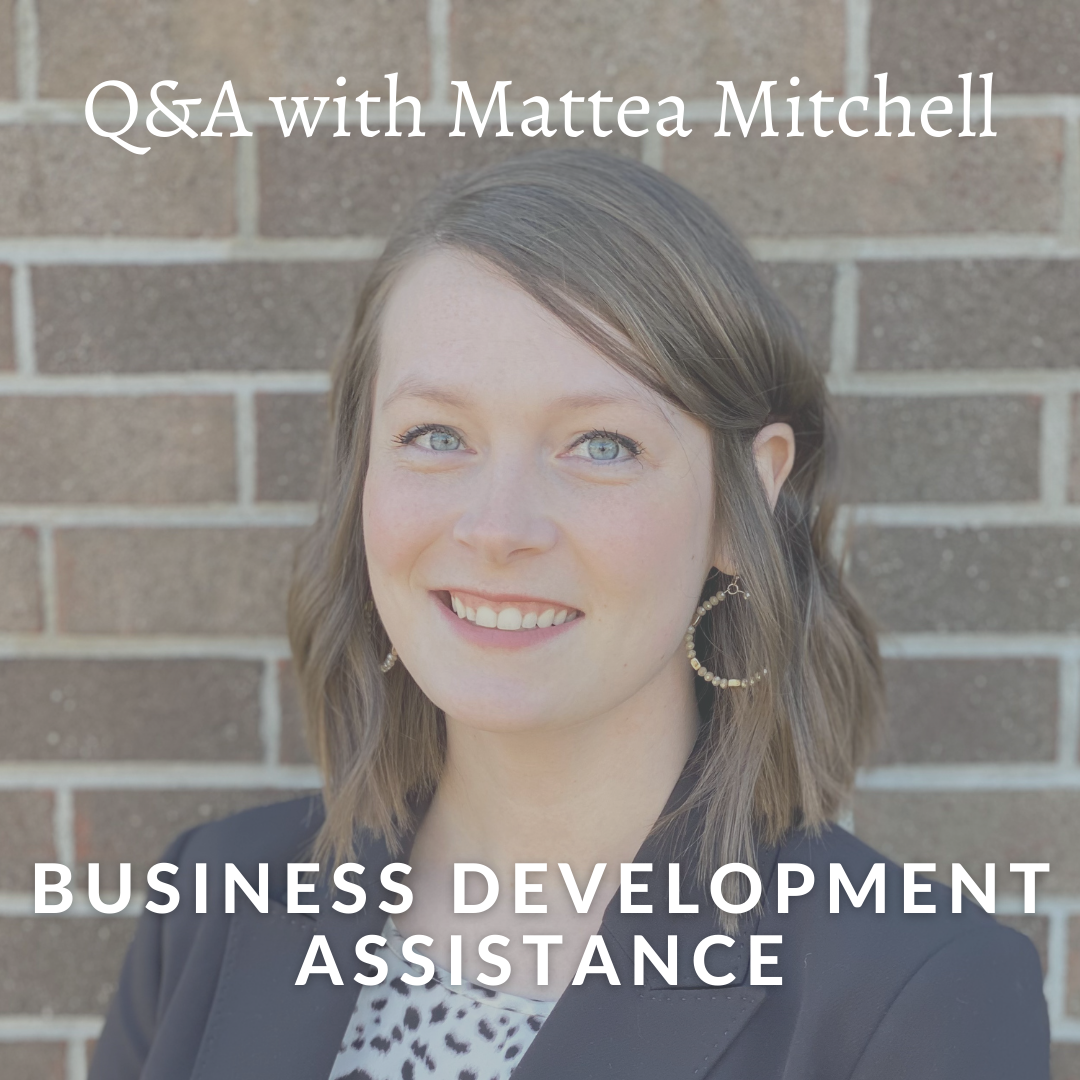
Mattea Mitchell, one of KCARD’s business development assistants, took some time to answer a few questions about herself and the assistance she provides.

With the Kentucky Local Food Systems Summit starting tomorrow (you can still register here!), we wanted to spotlight KCARD’s Kentucky Local Food System Expansion Initiative. Launched in 2020, the initiative works collaboratively with partners to assist Kentucky local food farmers and buyers in sales and sourcing of local food. Below are some common questions about the Initiative.

Cara Stewart, one of KCARD’s business development assistants, took some time to answer a few questions about herself and one of KCARD’s many services, recordkeeping support.

One question we receive a lot at KCARD is how to begin looking at a business’s financial statements and learning from them so that you can make good decisions going forward. Right now, this topic is especially timely since we know a lot of folks who are calendar-year tax filers are putting together their documents to take to their tax preparer.

Are you currently selling your products online? Do you want to start selling products online? Online sales offer an opportunity for your customers to shop whenever and wherever they want. Below are some tips for selling online.

You’ve made your first hire, gotten all the paperwork and file systems in place, and are ready to start training employees. How do you set yourself and your employee up for success? Below are some key points to focus on to make sure both parties have a successful experience.

“Well, I’ve already got so much into this crop, might as well see it through...”
“I spent a whole lot of money to start this project, so I need to spend more money to get it done.”
If you hear yourself saying this, do not make any sudden movements. You are about to sink a decision by considering your sunk costs. “Sunk costs” refers to money that is already spent. No matter your next decision, that money is G-O-N-E with no recovery, so if you try to base your decision on those costs, you could end up throwing good money after bad.

Developing and operating a successful business is never an easy task, but operating successful cooperatives can be even more challenging due to their unique business structure and the group dynamics involved. Here are seven ways that a cooperative can improve its odds of success:

With the upcoming growing season quickly approaching, the Kentucky AgVets program partners will be matching the first round of veteran participants with mentor farmers. Mentorships will be designed to provide hands-on training and develop a network for veterans looking to start their career in agriculture. Mentorships will start out at 9 months long and can be extended as needed if mentor and veteran participant agree.

When you first find a grant program that could fit your interests, your main source of information will typically be a document called the “Request for Applications”, also called the “RFA” or in federal programs, a “Notice of Funding Availability” or “NOFA”. This document is key in determining if a grant is a good fit for you or your organization and can easily surpass 40 pages in length. While you will need to read the entire document eventually, we suggest reviewing the following sections first:

FOMO. Yet another acronym that I had to learn from someone much younger than me. FOMO = Fear of Missing Out. It’s the term associated with people incessantly checking their phones, worried about missing out on the latest news about a celebrity, politics, an earthquake on the other side of the world, your friends’ vacation pics or missing out on experiencing something they are only learning about because of the phone in their hand.

Holidays are a time of fun, festivities, and feasting. Over the next few weeks, we will be sharing some of KCARD’s team members favorite family recipes to make around the holidays. This week, we are highlighting James’ Gisela’s Sauerbraten, which is a recipe from his grandmother that his family enjoys making.

Holidays are a time of fun, festivities, and feasting. Over the next few weeks, we will be sharing some of KCARD’s team members favorite family recipes to make around the holidays. This week, we are highlighting Brent’s Peppermint Ice, which is a recipe his daughter, Hannah, created recently.

Holidays are a time of fun, festivities, and feasting. Over the next few weeks, we will be sharing some of KCARD’s team members favorite family recipes to make around the holidays. This week, we are highlighting Haleigh’s Cranberry Salad, which is a recipe passed down from her grandmother.

Growing fresh-cut flowers can be a beautiful way to utilize your farm ground. However, like any new business, it’s important to set yourself up for success. A few key points to work through before tilling your first flowerbed:

Holidays are a time of fun, festivities, and feasting. Over the next few weeks, we will be sharing some of KCARD’s team members favorite family recipes to make around the holidays. This week, we are highlighting Kellie’s Chocolate Chip Banana Bread, which is a family favorite.

KCARD works with a lot of farmers and business owners. Some are happy with their business, some are happy with their personal life, but the ones that are happiest with both aspects have found a way to align their personal goals with the goals that they have for the business. Sometimes, that means stepping back from their business and acknowledging that the plans that they once had for the business no longer match their current lives.

Holidays are a time of fun, festivities, and feasting. Over the next few weeks, we will be sharing some of KCARD’s team members favorite family recipes to make around the holidays. This week, we are highlighting Olivia’s Swedish Tea Ring, which has been passed down from her great-aunt to her grandmother to her aunt and mother and now her.

Keeping records is VITAL to your business. It helps you measure your growth (or decline), see what is costing you the most, and give you an idea of how much money you have at a given time. A business owner must think about how they can best keep records to ensure the system will be useful. We’ve listed three types of systems you can choose from or blend together.

In September, KCARD and program partners were awarded a grant for the Connecting Kentucky Veterans to Agriculture Opportunities (Kentucky AgVets) program. Main program partners include the Kentucky Department of Agriculture, Horticulture Council, Kentucky Sheep and Goat Development Office and the Community and Economic Development Initiative of Kentucky (CEDIK).
In the last 20 years, several states, including Kentucky, have passed statutes that have created a new cooperative business structure, the limited cooperative association (LCA) that is a hybrid of a traditional cooperative and a limited liability company (LLCs).

The Cooperative Extension Service is a fantastic resource in Kentucky. In this guest post by Dr. Les Anderson, he discusses a new series of videos released on YouTube to help people who are new to farming and the role of the extension service in serving new farmers and new landowners.
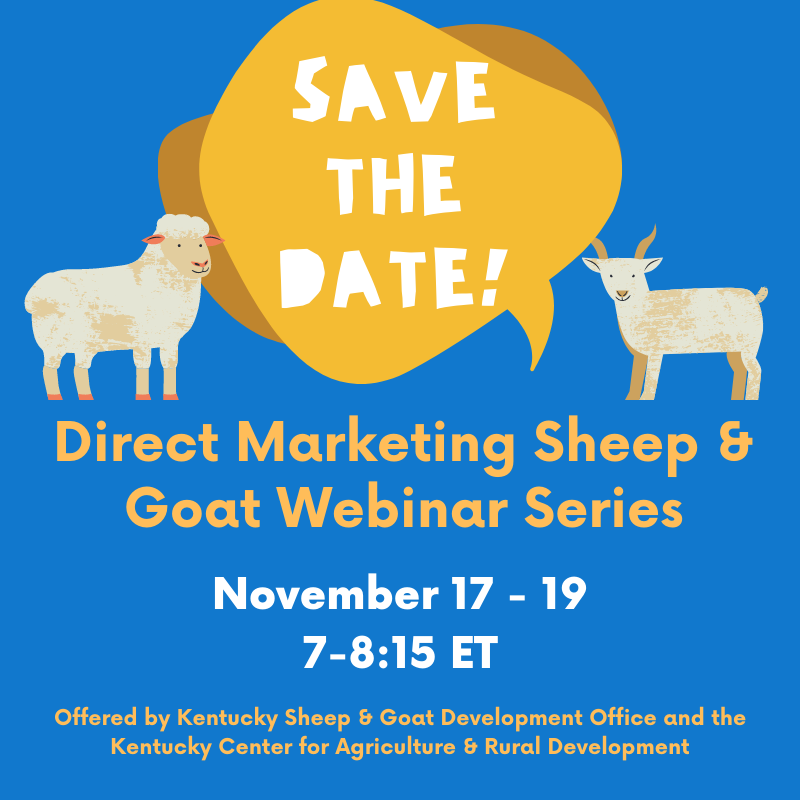
A Direct Marketing Sheep & Goat Webinar Series will be presented on the evenings of November 17, 18, and 19 to help producers interested in selling lamb, goat, and fiber products with production practices, processing, and sales and marketing questions. The webinar is being co-hosted by the Kentucky Sheep & Goat Development Office and the Kentucky Center for Agriculture and Rural Development (KCARD).

Haleigh Young, KCARD’s administrative assistant, fields tons of questions every day from other KCARD staff and new KCARD clients. She recently took some time to answer a few questions about herself and how new clients and inquiries begin working with KCARD.

Cooperatives exist in every sector of the economy, and cooperatives range from very small, local businesses to large multi-national corporations. Cooperatives can be classified by their primary business activity. Co-ops are often categorized as marketing, supply (or purchasing), consumer, service, and worker.

The news on shipping right now is rough. Shippers are planning for the busiest holiday season ever and are warning their long-time vendors to expect delays. What can you do to prepare if your business does a lot of shipping?

The purpose of a cooperative is to provide and distribute benefits to members based on their use of the services of the cooperative. Co-op benefits may include better prices for goods, improved services, a new market for goods, or a better source of inputs. These benefits also include receiving patronage refunds (also commonly referred to as patronage dividends), which is the distribution of net profits of the business based upon the use of the co-op’s services. The patronage refund may be in the form of payment or a written notice of allocation to the member’s equity account in the co-op.

Kellie Padgett, one of KCARD’s business development specialists, took a little time to answer some questions about herself, the new program Connecting Kentucky Veterans to Agriculture Opportunities (AgVets), and give some helpful tips for veterans interested in getting into agriculture.

Brent Lackey, KCARD’s senior business development specialists, took some time to answer a few questions about himself and his history at KCARD.

Over the next couple of weeks, we will be showcasing partners in our Growing Your Farm and Food Business Webinar series. These partners provide funding opportunities to Kentucky’s agricultural producers and agribusinesses. In this post, we are learning about the Farm Service Agency and the programs they administer.

Over the next couple of weeks, we will be showcasing partners in our Growing Your Farm and Food Business Webinar series. These partners provide funding opportunities to Kentucky’s agricultural producers and agribusinesses. In this post, we are learning about Kentucky State University and the assistance they provide.

James Barrett, KCARD’s grant facilitator, took some time to answer a few questions about himself and KCARD’s Agribusiness Grant Facilitation Program.

The Kentucky Horticulture Council (KHC) is another great resource available to Kentucky producers. KHC provides resources for information and education for growers, business owners, and the public to promote a thriving horticulture industry. In this guest post by Executive Director Cindy Finneseth, KHC discusses how to be prepared and creative this fall agritourism season.

Kentucky Center for Agriculture and Rural Development along with partners Kentucky Department of Agriculture, Kentucky Sheep and Goat Development Office, Kentucky Horticulture Council, and University of Kentucky’s Community and Economic Development Initiative of Kentucky (CEDIK) are collaborating on a $746,567 USDA grant to provide educational opportunities for veterans and transitioning service members interested in agriculture, develop a peer-to-peer network for veterans in agriculture, and construct a pathway that facilitates veterans’ entrance into agriculture-related careers. Additional support partners for this grant include the Kentucky Farm Bureau Federation, Kentucky Commission on Military Affairs, and Hopkinsville Community College.

Over the next couple of weeks, we will be showcasing partners in our Growing Your Farm and Food Business Webinar series. These partners provide funding opportunities to Kentucky’s agricultural producers and agribusinesses. The USDA Rural Development Office is an important partner in KCARD’s work as we apply for funding from their office to continue our work with Kentucky’s producers and rural and agribusinesses but also because they offer a wealth of programs to Kentucky’s rural businesses. In this post, we are learning about the USDA Rural Development and the programs they administer.

Today our inboxes are flooded with email marketing campaigns, some feeling spammy, but there is no denying the impact a well-crafted message can have on your customers. Email marketing has one of the best return on investment, for every dollar spent over $40 is returned, on average. In our previous Email Marketing 101 post, we talked about what email marketing is and some quick tips to get started. In this post, we’ve put together a few tips to help you expand your knowledge in email marketing and continue to increase your return.

There are lots of great resources available to Kentucky Producers. The Center for Crop Diversification offers budgets, horticulture profiles, and price reports. In our guest blog post by Brett Wolff, he discusses utilizing price reports in planning for next season.

Consumer trends changed drastically when the coronavirus hit. You probably have customers who never thought of purchasing local until it became a necessity. While stores, restaurants, and other businesses are opening back up, many consumer trends are sticking around. Keeping those new customers around will be key for sustaining the growth your business has had the past six months. So how do you keep your new customer coming back again and again? Here are five tips to keep your customers.

Over the next couple of weeks, we will be showcasing partners in our Growing Your Farm and Food Business Webinar series. These partners provide funding opportunities to Kentucky’s agricultural producers and agribusinesses. In this post, we are learning about the Governor’s Office of Agricultural Policy and the programs they administer.

If you are like many business owners, the coronavirus pandemic has turned your world upside down. Your cash flow or product availability might have changed, which means you might have to change up other pieces of your business, such as your marketing strategy. Now is not the time to cut your marketing budget or marketing efforts. Why? With so much uncertainty now, you need to reassure your customers that you are here for them and that your business isn’t going anywhere. Check out five tips to pivot your marketing during changing times.

Spencer Guinn, one of KCARD’s business development specialists, took some time to answer a few questions about himself and one of KCARD’s new services, AutoCAD drawings.

Due to COVID, consumers are changing the way they are buying and what they are buying. While many consumers are settling into learning to live with the reality of COVID, the impact of the pandemic has left more lasting effects on the way consumers are shopping, and what is important to them. What does that mean for you? In this post, we discuss 3 major themes in consumer trends that are projected to continue into fall.

The Kentucky Center for Agriculture and Rural Development (KCARD) will be hosting a series of five “Growing Your Farm and Food Business” webinars this October to assist agricultural producers and food businesses with understanding business fundamentals, identifying grant opportunities, and developing a strategy to seek funding. Webinars will take place from 10:00am – 11:30am Eastern/9:00am -10:30am Central and will be available for later viewing.

We have a saying in KCARD when we are looking at financial statements or projections that come into our shop – “Did you find the dead body in them?” This is our little way of referring to the situation where we see a financial statement and instantly know that something is not quite right. A lot of times it is not on purpose. Instead, it is often where someone makes a mistake as they are developing the statement that can lead to the financial reports being inaccurate and the business owner not truly understanding the past or future financial performance and health of their business.

In our blog post a few weeks ago, we took a look at how you develop initial revenue assumptions for a new business. In this post, let’s talk about an existing business and how we help that business develop financial projections. Why bother with developing projections? You know they are going to be wrong, right? Sure. Projections will almost certainly not be exactly correct because so many factors go into what will happen to reach a sales number or expense number.

In mid-July we hosted the “Direct-to-Consumer Beef Webinar Series” with several partners including the University of Kentucky Department of Animal and Sciences, Kentucky Beef Council, and several others. We offered this series to respond to the conversation and education around proper production, processing, business development, marketing, and sales for finished beef. We’ve pulled together a few of the noteworthy takeaways from the webinar series.

Have you wondered if your business has too many or too few employees working? You might want to consider calculating your labor-to-sales ratio. This number is a commonly used performance measure by businesses to track their labor costs and its impact on operations. The labor-to-sales ratio shows the total labor costs for each $1 in sales.

This week is National Farmers Market Week, giving us an opportunity to celebrate Kentucky’s farmers markets for boosting the local economy by supporting local producers, providing jobs, improving local nutrition, and much more. So how should you celebrate National Farmers Market Week? Simply visit your local farmers market! There are over 160 farmers markets in the state of Kentucky and over 2,700 farmers market vendors to buy from.

To prepare financial projections for a new business, you have to be able to come up with a way to calculate expected revenue. I have had conversations with people who insist that there is no way to come up with such a number and really struggle with this. How do you calculate your expected revenue for the next year to three years?

The day-to-day business operations of a cooperative are for the most part no different than any other business, but one of the key differences is that people who patronize the business play an active role in its governance. Cooperatives are democracies, and they are dependent upon the active participation of its members.

To continue our financial series this week, we’re discussing balance sheets. Your balance sheet shows what you own (assets) and what you owe (liabilities) on a specific date. This important financial statement says a lot about your business…

Have you heard of a hashtag? A hashtag is an online tagging device used on certain social media platforms. Using hashtags helps others easily find content centered on a certain theme or subject. A hashtag starts with the number (#) symbol followed by a series of words. Placing the hashtag symbol before the words will automatically turn the phrase into a searchable link.

When working with clients, KCARD often starts by looking at a current income statement (also called a Profit/Loss statement) that is in operation and helps develop a projected income statement for a new or expanded operation. This helps to show if the business is profitable now or will be profitable in the future. However, the cash flow statement is critical to understanding whether the business will be able to survive the initial startup stage or any downturns. This statement shows inflows and outflows of cash to or from the business. So what’s the difference between the two and how they are used?

Direct marketing is a wonderful way to promote your farm and fulfill a need for consumers. Our guest blogger, Dr. Gregg Rentfrow, has been with the University of Kentucky Cooperative Extension program since 2006 as the Meat Specialist. Dr. Rentfrow works closely with meat and livestock producers, and the 4-H and FFA programs in the state to provide training and education about meat production. Dr. Rentfrow is a trusted and valued resource for KCARD wit his extensive knowledge of the meat and livestock industries and has participated in several KCARD Marketing Locally Grown Meat workshops in the past.

If you look at a Profit/Loss statement (also called an Income Statement), you will often see Cost of Goods Sold (COGS) broken out from other expenses. What are these and why break them apart?
Costs of Goods Sold are expenses that are directly attributed to the amount of production. COGS are reported on the Income Statement and are segregated from Operating Expenses, which are expenses that are not directly tied to production.

Olivia Vogel, KCARD’s new Local Food Project Coordinator, took a little time to answer some questions about herself, the new Local Food Initiative Expansion Project, and give some helpful tips for producers interested in expanding their markets.

Dr. Steve Isaacs has been with the University of Kentucky Cooperative Extension program for over 28 years, specializing in farm management programs such as farm financial management, human resource management, and the economics of injury prevention. Dr. Isaacs is a trusted and valued resource for KCARD with his extensive knowledge in agricultural economics and business management. He has also been a mentor or instructor for many KCARD staff over the years.

If you ask any KCARD employee where they turn to first in a business plan they receive, there’s a good chance that – after reading the summary of what the business is wanting to do – the profit/loss statement will be the first page reviewed. We will start looking at how revenue was calculated and whether the expense lines show everything that we expect to see in that particular business. In the next few weeks, we will be going into more detail on how to develop financial projections, stay tuned.

A Direct-to-Consumer Beef Webinar Series will be presented on the evenings of July 14, 15, and 16 to help producers new to selling beef with production practices, processing, and sales and marketing questions. Kentucky Center for Agriculture and Rural Development, Kentucky Cattlemen’s Association, and the University of Kentucky are coming together to present information that should help producers navigating beef sales for the first time.

If you are new to direct meat sales and have just read our blog posts about having your meat processed for the first time and pricing your meat for profit, we’ve pulled together some more resources for you to explore.

The Kentucky Center for Agriculture and Rural Development (KCARD) is launching the Kentucky Local Food System Expansion Initiative to expand the work of multiple organizations that have laid a foundation in Kentucky for local food purchasing. Organizations involved in the project include the Kentucky Department of Agriculture, Kentucky Horticulture Council, Feeding Kentucky, Bluegrass Farm to Table, the University of Kentucky, and the Community Farm Alliance.

Chances are you are already doing some social selling if you have a Facebook business page, Instagram business page, or professional Twitter page. So, what is social selling? It is the art of using social media to find, connect with, understand, and nurture sales prospects. In short, it is the modern way to connect with current and potential customers to develop meaningful relationships. The goal with social selling is to bring value to your customer by anticipating their needs rather than just spamming them with “buy now” posts. We’ve put together some best practices to include with your social selling strategy.

Did you know that the average email subscriber receives about 13 commercial emails each day? How does your business break through that fog of emails to reach your customer? We’ve included a few tips below to help you get started, in addition to these marketing basics.

Fact: people are cooking and eating at home more. Those who weren’t cooking at home are now making meals several days a week for their families. Of those making meals at home, 35 to 40% of them started cooking for the first time, according to global management consultant SSA & Company. So, what does that mean for your food business? How can you educate new customers about your products so that you retain them once things get back to normal? Below are a few ideas for targeting the “new” home cook.

If you are new to direct meat sales and have just read our blog post about having your meat processed for the first time or are looking at updating your pricing, here are two questions you need to ask: What are your competitors’ prices; and, what is your minimum price to break-even. Check out the following blog post to get started on pricing your meat to make a profit.

U-Pick operations are a critical direct marketing approach for many farms in Kentucky and provide customers with a unique hands-on connection to fresh produce grown locally. Here are some key points to keep in mind before you open for the season.

If you are not offering your customers extra products or upgrading a specific item, you are missing a great revenue opportunity. Upselling and cross-selling doesn’t have to be complicated or a daunting task. It is a way to increase not only your bottom line but also the value you offer to your customer.

With restrictions on in-person sales and the challenges many markets are now facing, it is more important than ever to collaborate with neighbors and fellow producers. Collaboration can open new doors such as new customers, new retail locations, or the ability to sell online. We have listed a few ways you can collaborate with neighboring growers to give new and existing customers access to your products.

KCARD is fielding a lot of questions from farmers who are looking to sell meat from their farm for the first time, so we thought it would be a good idea to help answer a few of these questions through a post.

Some of you are ramping up your online communications for the first time. It’s easy to make some rookie mistakes in the process. Here are a few we have seen recently come across our desk that we wanted to point out.

This past week, the Kentucky Center for Agriculture and Rural Development (KCARD) partnered with UK’s Center for Crop Diversification (CCD) on a webinar comparing the pros and cons of farm-to-consumer distribution methods including On-Farm Pickup, Off-Farm Pickup, Home Delivery, and Shipping.
One thing we want to emphasize is that your business doesn’t need to do it all – i.e. offer every distribution method mentioned above. What works for one farm business might not work for yours. Below are a few key thoughts when it comes to picking a distribution method or two.

The name of the game these days is social distance. So how do you accept payments from customers without getting closer than six feet or having to handle cash? Digital wallets are financial accounts that allow users to store funds, make transactions, and track payment histories by computer or phone. Here are some of the most popular options that will allow you to take payments without having to get a credit card reader (and some that connect with Square).

If you are not on social media or are not actively engaging your fans and followers, you are missing out on potential customers and interactions to build your brand. Social media is now more “social” than ever and people who are now homebound are spending more and more time on it. So how do you ramp up your activity to reach customers?

If you’re in the business of selling local food right now, you might be in a unique situation with an uptick in sales and an increase in new customers. We are hearing from businesses that they are getting orders from folks who have never purchased food anywhere other than the grocery store, who suddenly want to buy in bulk from a local farmer. New customers can be a lot of work. You can spend a lot of time and energy patiently giving answers to endless questions. Here are 3 tips on how to turn a new customer into a regular.

Question: Should I apply for “Coronavirus” money?
Answer: We are getting a lot of questions about coronavirus funding, so here’s what we do know and what we do not know.

Are you looking for ways to increase your knowledge of marketing, production, business management, and more during this time of quarantine and rain? Check out these online training programs from some great resources.

Farmers markets must get innovative in the way they provide food access to their customers while keeping in line with social distancing requirements during this time. Consider the restraints of your market and what is feasible for your market. We encourage you to check out the resources put out by the Kentucky Department of Agriculture and the Community Farm Alliance for markets across the state.

Consumer buying habits are rapidly changing. Restaurants are only open for carry out and delivery while many schools are implementing meal drop off programs. No one knows exactly what will happen, but as COVID-19 updates come in, remember the following when it comes to your markets.

Selling online can be a great opportunity for businesses to make up for lower in-person sales, pre-order products for quick pickup or delivery, and increase customer base to those who might not attend markets. Choose an online ordering service that meets your needs and works with the systems you already have. Check out five online ordering options we have seen clients use.

People are requesting gift certificates to help support local farms and local food businesses. Offering gifts cards is a great way to let people support you during this time of crisis. So how do you set that up? It depends on how you take payment now, but you have some options…

Question: I’m still not sure how COVID-19 is going to affect my farm business. I have 5 employees and I don’t know what to tell them if anything. What do I tell my employees?
Your employees already know this is not a normal spring season. Clearly communicating your plans and decisions will help them avoid assuming the worst and enable them to plan for the coming weeks.

Question: How do I manage cash flow when I’m concerned about the effect of reduced travel/walk-in traffic on my business?
Answer: The next two weeks and the next two months are going to be critical for many small businesses as we all figure out what the eventual impact will be. Click to read about a few rules of thumb for businesses.

Coronavirus is a new challenge to our healthcare system and all of us are learning as we go. However, good practices on crisis management apply here just like they do with other crises. KCARD will be providing additional Q&A posts about how to handle the specific problems we are hearing from businesses with whom we work with, so stay tuned.

Two weeks ago we talked about dealing with the crank in person - that person that leaves a bad review, yells at your staff, decides to leave and never come back and tells all their friends to do the same. What happens when the person complains online?

For most farm-based products, you do not collect and submit sales tax in Kentucky. However, if you are selling non-food items, such as soaps, painted gourds, or other farm-related crafts, you must collect and remit sales tax. In Kentucky, you do this quarterly. What if you sell online, in other states?

This past Friday and Saturday the 4th Annual Eastern Kentucky Farmer Conference was held at the Morehead Convention Center in Morehead, KY. A technical assistance “ThinkTank” and an Eastern Kentucky Grower Buyer Meetup added to the conference this year, giving attendees the opportunity to not only network with other producers but also buyers, funders, and technical assistance providers. The conference offered 16 different sessions, including 4 short courses on Friday discussing topics such as high tunnel production, food safety regulations, business planning, and online marketing. Saturday included 12 different sessions on topics such as starting a CSA, no-till vegetable production, non-timber agroforestry, agritourism, and small fruit production.

Have you thought about getting crop insurance but assumed it would be too expensive or that it was only for large-scale operations? Crop insurance can be an option for your farm to help you cover the risk associated with weather or revenue. Today, the federal government helps cover 38% to 80% of your premium, depending on the amount of coverage, the policy, and what you grow.

We all have that one customer that refuses to let it go. I stopped at the local frosty freeze to pick up food one night and when I was looking up the phone number on their Facebook page, saw a bad review. It was harsh, laying the business out for something so silly that you had to laugh. My first reaction was, “This guy has never run a business.”

If you attended the National Farm Machinery Show this past week, the temptation of a bright, new shiny piece of equipment was a tempting one. Here is an “oldie but goodie” article from 2016 about making a big purchase for your operation.

The 4th Annual Eastern Kentucky Farmer Conference is taking place February 28 and 29, 2020 at the Morehead Convention Center in Morehead, KY. Topics for this year’s conference include high tunnel production, GAP and post handling practices, selling in today’s digital market, small fruits production, understanding your processor, no-till vegetable production, livestock management, and many more that you won’t want to miss.

We’re hiring! The Kentucky Center for Agriculture and Rural Development is hiring an individual to lead a new project – the Kentucky Local Food System Expansion Initiative – working with agricultural producers and food businesses to expand market access for Kentucky farmers and enhance buyer access to local food sources.
Kentucky Center for Agriculture and Rural Development (KCARD) is a cooperative development center, providing education, support, and advisory services to groups interested in forming cooperatives and to cooperatives who have already formed. KCARD has served these needs in Kentucky since 2001 providing assistance to over 50 cooperatives and helping with the establishment of 27 cooperatives.

While it is important to always invest in marketing your business, the holidays bring a unique opportunity. Customers are looking for inspiration as they finalize meal plans, gifts and decorations. Make it easy for them to see your brand as a solution to their problems.
The cooperative business structure can be an effective organization, but it is not appropriate for everyone or every business idea. When deciding whether to develop a business as cooperative, there are four key factors that need to be present for the cooperative structure to be the right choice.


While developing your marketing strategies and posts, it can get overwhelming on what to create, how to create, and what tools you need to succeed. We have pulled together five tools that help us with everything from content creation to event registration to data analysis.


Have you ever thought of getting into agritourism? Agritourism is the act of inviting people to come to your farm or ranch and participate in on-farm activities. These activities can include U-pick operations, orchards, pumpkin patches, ranch/farm camps, on-farm retail stores, farm stays, wineries and vineyards, and much more. Here are five things to consider before you open your agritourism operation…

Once you decide to hire someone, you need to lay the groundwork for keeping good employee records. What are some recordkeeping basics when you hire someone?

This week we are featuring the On-Farm Water Management Program, Kentucky Proud: Farm to Fork Grants, and Kentucky State University's Small Scale Farm Grants.

Sharing the story of your business is a way to make a stronger connection with your customers and can give them a compelling reason to buy from you. So, how do you capitalize on your story when developing promotional plans for your business? Click to learn five ways to share your story.

In our last post about Co-ops we talked about how cooperatives demonstrate the following principles: User-owned, User-Controlled; and User-benefitted. There are many positive attributes to the cooperative business structure, but it is not the appropriate structure for every business and its owners. Choosing the appropriate business structure is an important strategic decision for business owners.

This week we are featuring the Kentucky State University Small Scale Farm and Farmer Education Grant, the Kentucky Conservation State Cost Share Program, and the USDA-NRCS Environmental Quality Incentives Program.

This week we are featuring the Kentucky Agricultural Development Funds On-Farm Energy Efficiency Incentives Program, the Rural Energy for America Program Grants, and the Kentucky Proud Promotional Program Grants.

This week we are featuring the USDA Farmers Market and Local Food Promotion Program Grants. If you're interested in applying, check out the three webinars we have shared! These webinars will give you an inside scoop into crafting your grant proposal and government statistics on local food.
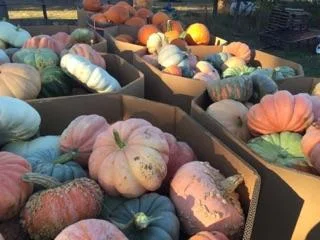
You can easily “fall into” a marketing channel or a product that you did not plan because you want to take advantage of every opportunity you can in an effort to make your farming business work. Unfortunately, all too often an “opportunity” may not be as good as it first appears, and you end up with lots of things your business is doing that really do not match where you want the business to go. And you may be doing a lot of things that actually cost the business more money than they make.

USDA opened the Community Food Project Grants and the Gus Schumacher Nutrition Incentive Program Grants (formerly FINI) early this year. There is a super short turn around with applications due on June 3rd and 10th respectively. Also, the USDA Farmers Market and Local Food Promotion Program Grants are open with a deadline of June 18. Click to check out more information about the programs.

If you have a retail spot or retail product at a farmers market, you have some valuable real estate. Every square foot of that space has the potential to earn money and you need to use that space as effectively as you can to maximize your profit. Here are three tips for using every square foot to increase your sales.

So, what is a cooperative? According to Merriam-Webster Dictionary, a cooperative is “an enterprise or organization owned by and operated for the benefit of those using its services.” Put simply a cooperative is a business owned and controlled by the people that it services.

This week we are featuring the USDA Beginning Farmer and Rancher Development Program Grants, USDA Rural Business Development Grants, and the USDA Farmers Market and Local Food Promotion Program Grants.

This week we are featuring the Kentucky Agricultural Development Funds On-Farm Energy Efficiency Incentives Program, the Rural Energy for America Program Grants, the Kentucky Conservation State Cost Share Program, and the USDA-NRCS Environmental Quality Incentives Program.

This week we are featuring the Kentucky Proud: Farm to Fork Grants, Kentucky State University Small Scale farm Grants, and USDA Rural Business Development Grants.

Would you like to learn more about how Kentucky’s agricultural businesses operate and how your classwork applies to real-world business situations? We are looking to hire an intern for the Fall 2019 semester. Click to read more about this excellent opportunity!

This week we are featuring the USDA Rural Business Development Grant, the Kentucky Proud Buy Local Program, and the Kentucky Proud Promotional Grant.

This week we are featuring the Rural Energy for America Program Grants that are due soon and the new Local Agriculture Market Program (LAMP) that was established in the farm bill. The LAMP program will provide permanent funding for the Value-Added Producer Grants, and the Farmers Market & Local Food Promotion Grants which is great news for farmers and agribusinesses in Kentucky.
This week we are featuring the Kentucky Conservation State Cost Share Program, the USDA Natural Resource Conservation Service's Environmental Quality Incentives (EQIP) Program, and the Kentucky Proud Promotional Grant Program. Please check out more information about each program below.

This week we are featuring the Kentucky State University's Small Scale Farm Grant Program, and Community Farm Alliance's Farmers Market Support Program which offers a Kentucky Double Dollars cost share and a farmers market manager cost share. Please check out more information about each program below.

Is it time? If you have been a one-man or one-woman shop and haven’t made a hire yet, what are the questions you should ask yourself before making that hire? Check out this post from KCARD staff on the questions they pose to businesses considering this step.

Farmers, are you interested in selling to your local schools next season? If so the Kentucky Department of Agriculture is offering a mini-grant to help expand Farm to School sales. The Kentucky Farm to School: Producer Engagement Grants are due on December 14, so if you are interested you need to act fast!

You never have to look far for a great gift during the holiday season! This holiday season, the Kentucky Center for Agriculture and Rural Development is showcasing products of producers and agribusinesses on Facebook and Twitter beginning November 26th through December 21st.

Would you like to learn more about how Kentucky’s agricultural businesses operate and how your classwork applies to real-world business situations?
The Kentucky Center for Agriculture and Rural Development (KCARD) is currently searching for a college junior, senior, or graduate student majoring in Agricultural Economics to serve as a paid intern for summer 2019.
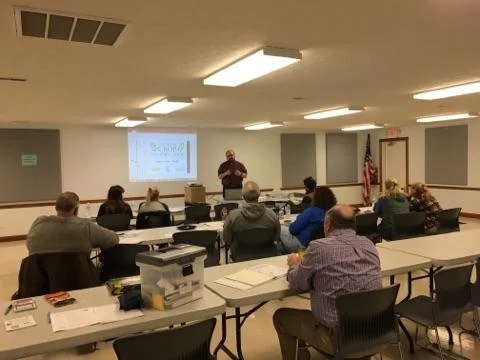
Our 2018 Grant Workshop season is about to begin. KCARD's Agribusiness Grant Facilitation Program will be hosting five Grant Workshops this season. The workshops will cover a broad range of funding opportunities for farmers, agribusinesses, and non-profits that support agriculture in Kentucky.

Facebook – it’s one of the best free tools you have to promote your market and reach current and new customers. It’s also constantly changing. In 2018, Facebook changed their algorithm used to show posts on users’ news feeds to make it more community oriented. With the new changes, how can you bring awareness to your market while promoting content? Leverage Facebook’s post boosts, ads, and the ability to go live to help you reach audiences that might not be aware of your market and help “advertise” your market to new customers.

Agricultural producers in Kentucky are using raw agricultural commodities including goat milk, cow’s milk, and various herbs to make soaps and cosmetics.

Instagram is an online photo and short video-sharing service that has grown in popularity among teens and young adults. This social media platform allows users to share short videos and photos on Instagram and other social media sites.

If you are planning to apply for a federal grant and new to the sam.gov system, listen up! The System for Award Management just started requiring a notarized, signed letter to register as a new entity before they will activate your SAM.gov entity registration.
KCARD is now a USDA-certified agricultural mediation center, bringing free, confidential mediation services to Kentucky farm families for the first time. This program helps producers navigate challenges such as agricultural loans, farm transition, and succession planning with the support of a neutral third party. Learn how this new resource strengthens support for Kentucky agriculture.